
Story
Dear Friends, Family, and Colleagues,
Thanks to all of you for contributing to my Marine Corps Marathon last year. I was not planning to race this year. Three developments, however, compelled me to race in support of critical biomedical research on September 20, 2026, and it is my hope that you may join me in supporting science by making a gift to my Washington DC Half Marathon effort.
The first development is the dramatic drop in federal funds to researchers. From February through June 2025, the National Institutes of Health obligated almost $8 billion less for awards than during the same period in FY2024—only about 62% of the prior year's level. More than 1,800 NIH grants were terminated between February and June 2025. Lastly, the NIH received 12.9% more research project applications but made 20.5% fewer competing awards. Consequently, the success rate for applications plunged from 18.5% to 13.0%.
The second is novel scientific discovery to date. Between 2024 and 2025, there was a dramatic rise in percentage of drugs approved by the FDA deemed “first-in-class” and a 54% increase in FDA approval for expedited regenerative-medicine designation. An example of a highly innovative project from the FNIH portfolio includes a study published earlier this year in Nature Medicine shows that a single blood test can assess a person’s risk of developing Alzheimer’s disease and predict approximately when symptoms will start. This has major implications for clinical trial structures, more precise identification of the right time to intervention, and a clearer path toward prevention.
The third is a promising future, which includes an ambitious $200 million public-private partnership the FNIH is launching with the National Cancer Institute to create a national roadmap for cancer vaccines (first reported in the WSJ). The goal is to determine whether cancer vaccines can meaningfully improve survival in solid tumors and create the infrastructure to bring them to patients across the country.
We can’t completely bridge the gap created by the decline in federal funding. But we can meaningfully improve the prospects for new therapies for patients with Alzheimer’s, cancer, and other devastating diseases.
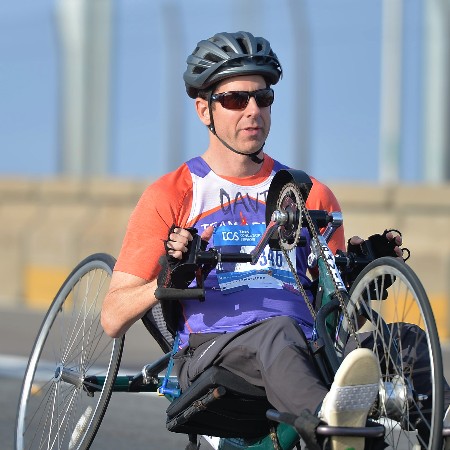
I will be participating in the Washington DC half marathon on Sunday, September 20. Since I’m only doing a half marathon, I am reducing my goal to $130,000, 50% of last year’s. If you could give half of what you did last year, I would be deeply appreciative. Please click on the "Give Now" link above to contribute. Thank you so much for your support.
With gratitude,
David