
 Campaign by
Story
THE PROGRAMME
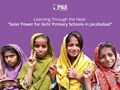
PAGE operates 20 community-based Non-Formal Education (NFE) schools in Jacobabad District, Sindh, each enrolling approximately 30 children, for a total of 600, of whom approximately 60% (around 360) are girls. All are out-ofschool children who have never enrolled or have dropped out, and who come predominantly from the most marginalised households in an already underserved region. The schools use a curriculum developed by the Japan International Cooperation Agency (JICA) and formally approved by the Government of Pakistan. This accelerated curriculum enables children to complete the full primary cycle, Classes 1 to 6, in three years rather than the conventional five to six. Students in the final year of primary school sit a government-recognised end-of-school assessment and receive a Primary Completion Certificate, accepted by local state secondary schools, which provides a direct pathway into mainstream education. The 20 schools have been formally outsourced to PAGE by the Sindh Government under a PublicPrivate Partnership. The DL&NFE provides £3 per child per month to cover core operating costs. PAGE supplements this funding with its own resources and donor grants to improve facilities, deliver teacher training, conduct monitoring and evaluation, and ensure consistent programme quality.
ABOUT JACOBABAD
Jacobabad is one of the hottest inhabited places on earth. It holds the Pakistani temperature record of 52°C and on at least four occasions has reached a wet-bulb temperature of 35°C, the physiological threshold above which the human body can no longer cool itself, making it one of only two cities in the world to have crossed that limit. Power cuts compound the danger, lasting 12 to 18 hours a day during the hottest months. For the city's poorest residents, there is no escape: no air conditioning, no reliable electricity, and for children, schools that are dangerously hot and largely inaccessible. Many families withdraw children from education entirely when conditions become unsafe, entrenching a cycle of poverty and exclusion that PAGE's programme is designed to break.
WHY SOLAR POWER IS ESSENTIAL
As described above, Jacobabad's classrooms become dangerously hot during summer, and power cuts lasting 12 to 18 hours a day mean that even schools with fans cannot rely on them. Sessions are curtailed, children stay home, and the teaching cannot be delivered as intended. Without an independent power source, the schools cannot provide the safe, consistent learning environment that both the programme model and the government partnership require.
THE IMPACT

This grant will fund the installation of solar power systems across all 20 NFE centres in Jacobabad (see full itemised budget below). Solar power will keep classrooms functional throughout the hottest months, allowing teachers to deliver the full curriculum without interruption. Attendance and retention are expected to improve, particularly for girls whose families are most likely to keep them home when conditions deteriorate. Each installation will have a lifespan of ten or more years, benefiting successive cohorts of children well beyond the grant period.