


Story
The short version is this: Once upon a time, my head unravelled into a million disparate threads, and sometime later, I put it back together on the road.
The long version goes like this:
This time two years ago, I thought I was going to die. Not that I wanted to - nay, I wasn't suicidal, I was too preoccupied with the fear of death to actually want to die; and neither was it an issue of sudden existential awareness. I didn't think that I was going to die someday, I thought that I was going to die like right now, or, at the very latest, by the end of the week. Only, the end of the week would come, and I'd still be kicking, but I'd still be panicking, ever certain that my demise was coming and it was coming now.
And it went on and on, an ever-present anxiety that was punctuated by a few memorable incidents of sheer terror: I once had a small surgical procedure that went off without a hitch, but I spent days afterwards, frozen on my bed in horror, waiting for a blood clot to form in my legs and travel up to my lungs and kill me. I developed a serious compulsion for checking my mouth for ulcers - an indisputable sign not of stress, but that I had somehow contracted HIV which had instantly developed into AIDS*, which of course meant that I would be dropping any minute now. I started drinking in earnest, but only briefly, because I soon began symptom-checking my hangovers on Web MD, unconvinced that the sickness I felt was caused by alcohol and not by my imminent doom. I stopped immediately, and didn't drink any for almost a year afterwards.
(*While we're at it, let's also end the stigma against HIV. Things are not as they were. For more information, please check out http://www.tht.org.uk.)
In the end, naturally, I wound up in the hospital, laying on a gurney in the reception of A&E, looking up at the paramedics who had brought me there, listening to them tut about wasted resources. Wasted resources? I was obviously dying. My heart rate was out of control and I couldn't stand up. The end that I'd been anticipating for months was NIGH. It was here, and I was finally done for.
But I obviously wasn't - and obviously these episodes were panic attacks - and somewhere, in the depths of my psyche, I knew it well and fine. My inner voice of logic would call out to me from miles away: "You're off the rails, man! You're a goddamn hypochondriac, sort yourself out." And I would take these words and mince them into a self-deprecating joke that I would relay to my friends: "Ha ha, just a bout of the good ol' hypochondria! Keeps me healthy, you know? You should try it sometime."
And the uncontrollable hypochondria was, as it seems to me now in hindsight, the natural worsening of anxiety problems that I shrugged off for years. Incessant worrying, disrupted sleep, compulsive checking, the insatiable need to know everything, the fruitless grappling for a sense of control over a reality that is by its very nature uncontrollable... But hey, that's who I was! A born worrier with a natural nervous disposition. It was my first identity, aged 9 or 10. And if I wasn't sick with about worry about something, I was pretty damn certain that the entire universe would unravel as punishment for not being on my guard. It was my job to freak out about things on behalf of everyone I knew, a burden that I had to carry for the sake of humanity. It was my job. It was who I was, and if I wasn't wrecked with nerves all the damn time, who was I?
But of course, anxiety disorders aren't who we are, and the universe unravels everyday in some shape or form, whether I worry about it or not. And I will get sick and die someday, whether I obsess over it or not. But this is what I learned much later on, months into an antidepressant regiment, long after my last CBT session. And undoubtedly, these services helped move me from a place of off-the-charts anxiety and inertia to a place where I was able to rationalise my feelings and get on with myself. But what really cemented the advice from my friends and my therapist came after, and this is why I'm cycling for Mind:
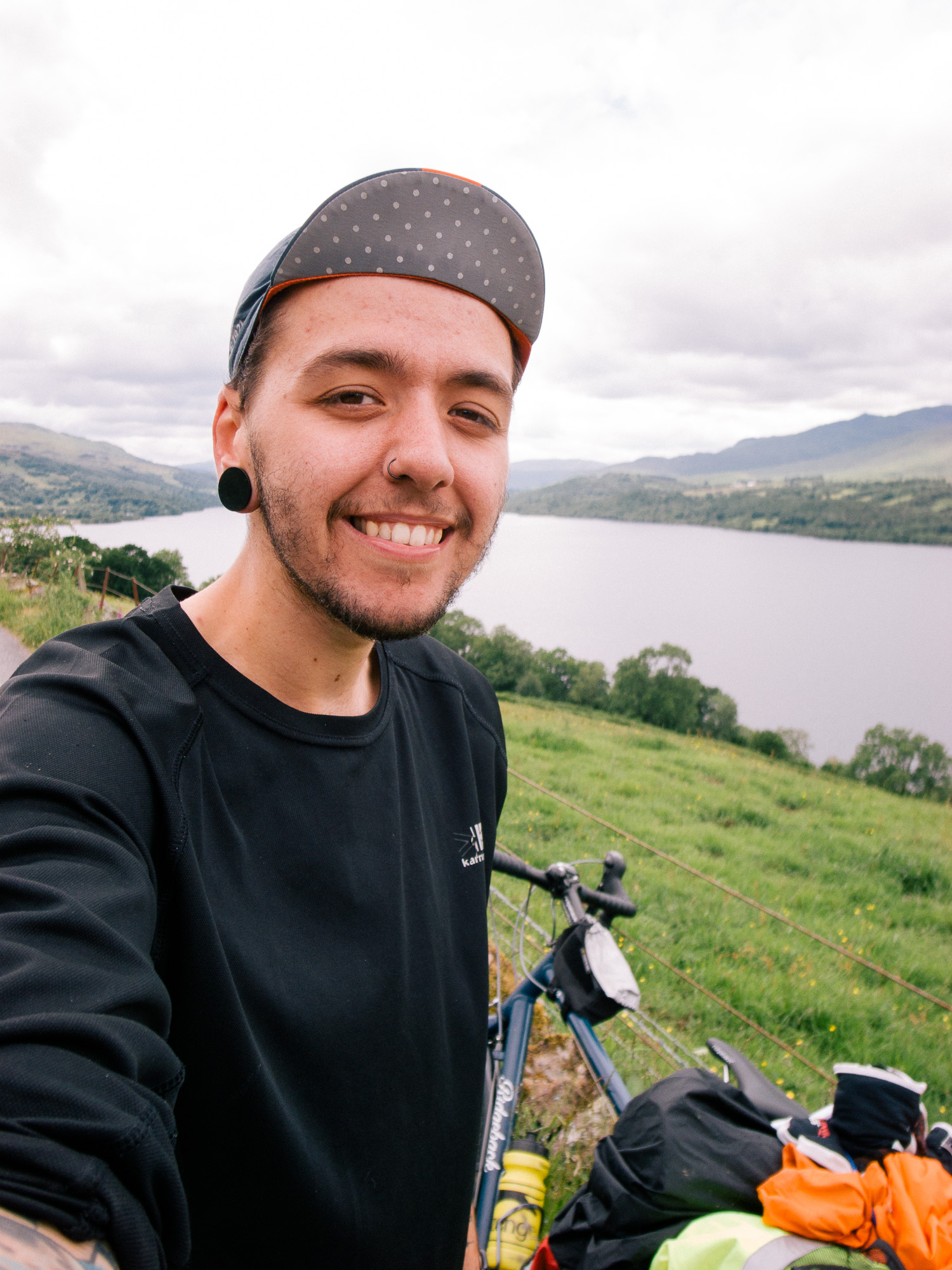
Late in 2016, I moved out of my family home on a whim to Stirling and there, I bought a bicycle. I spent the first few lonely months there riding by myself through the farmlands and over the foothills of the Ochils. And I don't know what compelled me to start riding, but I didn't start cycling to save myself or cure my mind or change anything at all.
In fact, I didn't know that my relentless pedalling was teaching me anything until it had. I didn't know that my mind had been endlessly running, constantly screaming out thoughts for years on end until it became silent, for the first time ever, on those roads. And it was all inadvertent, an accidental route towards something resembling mental health.
And months after I started, I was cycling on a path that took me through a wood in Clackmannanshire, and I realised with a shock that not only was I calm, but my head was quiet and I was present. Forever preoccupied with an uncertain future, cycling pulled me back to the moment as it was. Completely on accident and without even knowing it, every time I jumped onto my bike, I was lulled into a near-meditative state by the passing of the tarmac beneath my wheel. And I realised then, that this was mental health.
And so, I'm cycling 100 miles between Glasgow and Edinburgh in September for my sheer love, appreciation, and endless gratitude for the road. And I may as well do something for others, however small, while I do it. After all, I've come to see now that mental health was never my problem alone: its a common ailment, exacerbated by the belief that we suffer alone. But we don't - we suffer alone, together.
I found my tether to the present, but I'm fundraising for those who still struggle, who're struggling right now. 1 in 4 people in the UK will suffer a mental health problem this year alone; someone you know will be suffering right now. Cycling helped me, but it won't help everyone. And likewise, we aren't always able to help those close to us. But organisations like Mind can help.
And if you're struggling your mental health, you can find out more by going to www.mind.org.uk or by contacting them directly on 0300 123 3393.
If you need help right now, with any mental health crisis including panic attacks, you can call the Samaritans on 116 123 or NHS Direct on 111.
Or, if you just need an ear, you can contact me. Maybe we can go for a ride together, or maybe not. But we can talk together, anytime.
Let's not suffer alone, together. Let's suffer together, ride together, talk together, be together. And let's help those who can best help others.
Best,
Cam