
Story
Back in March, I took advantage of a free health screening offered by my employer, CEMEX. What seemed like a simple test led to several follow-up appointments over the following months, including blood tests, doctor consultations, an MRI scan, a biopsy, and yes, there was even a finger in there too.
Three months later, I received my official diagnosis: very early-stage, low-risk, non-aggressive prostate cancer.
In many ways, I'm incredibly fortunate. The cancer was detected so early that I don't require treatment at this stage. Instead, I'm on an active surveillance programme, which involves regular blood tests every three months and an MRI scan every 12 to 18 months. Treatment will only be introduced when the time is right and if it becomes necessary.
While that may sound surprising, there are good reasons for this approach. Some treatments can have significant side effects, and because my cancer was caught so early, there is no increased risk in delaying treatment. The NHS will continue to monitor me closely and intervene when needed, while the condition remains highly treatable.
The reality is that I believe many more men should be in the same position as me.
Prostate cancer can be deadly, but in many cases that is because it goes undiagnosed until it has progressed too far. In rarer cases, it can be a more aggressive form of the disease. However, prostate cancer is extremely common, and early testing gives men the best possible chance of receiving the right care at the right time.
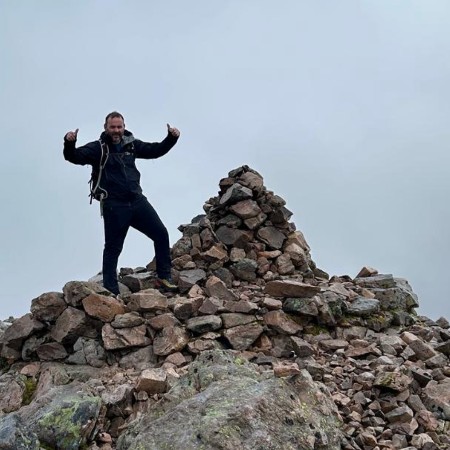
That is one of the main reasons I've decided to climb Mount Kilimanjaro in February 2027.
Of course, I want to raise money for a worthwhile cause, but more importantly, I want to raise awareness. If sharing my story encourages just one friend, colleague, family member, or former schoolmate to book a simple PSA blood test, then it will be worth it. I am fully self-funding the trip, every penny donated will go to the Prostate Cancer UK charity.
Kilimanjaro has been a dream of mine for many years, and it's exciting to know that dream will soon become a reality. It won't be easy. The biggest challenge will be the altitude and the risk of altitude sickness. To give myself the best chance of success, I'll be taking a seven-day route, sleeping on the mountain, and allowing more time to acclimatise properly.
The toughest part of the entire challenge will be summit night. I'll begin the final ascent around midnight, climbing through the darkness in temperatures that could fall to minus 20°C. If all goes to plan, I'll reach the summit shortly after sunrise, somewhere between 7 and 8 a.m.
I've been training since late August and will continue to push myself in the months and weeks ahead. Every mile walked, every hill climbed, every pint not drunk, every weight lifted, and every training session completed is about improving my endurance, coping better with the altitude, and giving myself the best possible chance to be one of the 0.005% of the world’s population to have stood on the roof of Africa.
Most importantly, it's about helping more men become one of the lucky ones too.
Thanks for taking time to visit my fundraising page. Donating through just giving is simple, fast and totally secure your details are safe they will never sell them or send unwanted emails by giving to this page you are helping me meet my fundraising targets.