



Story
Thanks for taking the time to visit my JustGiving page.
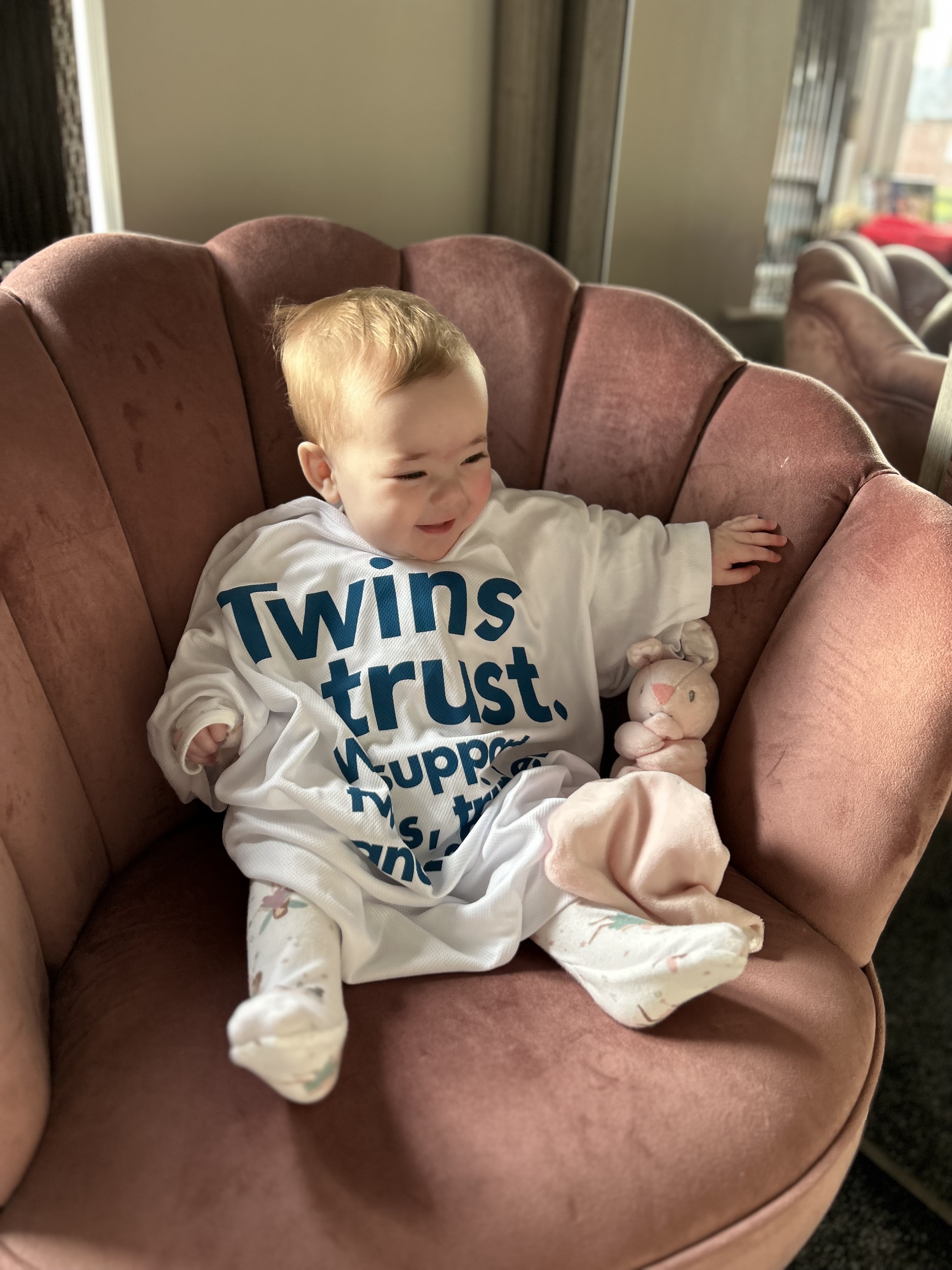
We are raising money for research into TTTS, TAPS, TRAPS and other complicated pregnancies effecting multiple birth pregnancies to help save babies’ lives and raising awareness for Twin-to-Twin transfusion syndrome in memory of our daughter Daisy and all the other babies that have died due to TTTS.
TTTS and other conditions causes extreme worry and distress to families who are diagnosed and while some babies survive the ordeal, many, sadly, do not. TWINS TRUST are an amazing small charity, and they want to do more to help families who are affected.
Training has commenced ! I am looking forward to running past the London landmarks knowing I am making a difference to babies and families now and in the future!
Any donations big or small are hugely appreciated!
Thank you.

What is TTTS
Twin-to-Twin Transfusion Syndrome (TTTS) is a potentially life-threatening condition that affects about 10-15 % of identical twins who share a placenta, it can also occur in triplet or higher pregnancies. If untreated, 90% of babies are likely to die. Even with treatment slightly increasing these odds, there are still 10 - 20% of surviving babies that are likely to be disabled or have a long term condition.
The most effective treatment is fetal laser surgery to seal off the connecting vessels in the placenta, this stops the sharing of blood with the goal of halting the progression of the condition.
Below is some very recent research carried out for Selective intrauterine growth restriction (sIUGR), it is a condition that occurs in twin pregnancies when one of the babies does not receive enough nourishment through the placenta to grow at a normal rate and can become life threatening.
FERN study
Vital selective growth restriction (known as sFGR or sIUGR) research may be possible in the near future thanks to the FERN study, which has considered the current prevalence and management of sFGR pregnancies, and the views of families and clinicians, to decide whether a trial into the different treatment options is possible. The study has already published some of its findings, with the final part of the research due to complete in May. This study helps provide an important ethical framework for future research into this condition. Importantly, it has highlighted that a randomised controlled trial is not appropriate for the interventions associated with sFGR, and other research designs need to be considered. With the support of members and funders, Twins Trust has been involved throughout the study, including helping to recruit parent representatives who are involved in developing all aspects of the research.
For more information and links to the published findings, visit the Twins Trust website:
https://twinstrust.org/who-we-are/what-we-do/research/clinical-research/the-fern-study.html