


Story
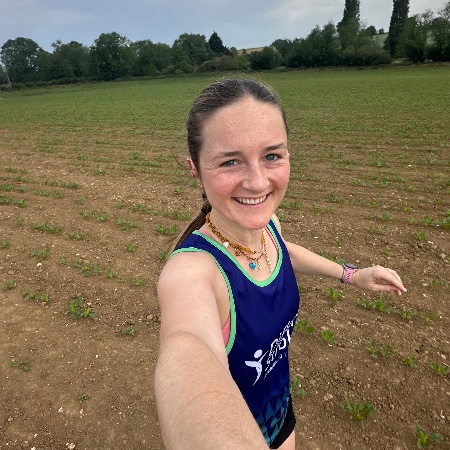
On 4th July, I will be running the Peak District Ultra Challenge, a 52-kilometre and 1,250m elevation ultra marathon across tough terrain, steep climbs and long miles. I’m doing it for Different Strokes, a charity that supports working-age stroke survivors in reclaiming their lives. And I’m doing it for my boyfriend Rory.
On 2nd May 2025, while driving down to Dorset, Rory suffered a stroke in the passenger seat next to me.
It started with him losing his vision, then he lost feeling down the right-hand side of his body and face. He became confused and his words stopped making sense. And then he lost consciousness while we waited for the ambulance.
Nothing prepares you for watching someone you love deteriorate in front of you in a matter of minutes. After intensive testing and a long May Bank Holiday weekend in Southampton Hospital, doctors discovered Rory had a previously undiagnosed hole in his heart. It had caused the stroke that day, and evidence also showed it had also caused another stroke at some unknown point in the past.
Some strokes go unnoticed, some change lives forever, but no two strokes are ever the same.
“You look like you’re recovering well…”
We are incredibly grateful that Rory did not suffer severe long-term physical disabilities, but the cognitive and emotional impacts can last a lifetime.
Rory now lives with:
- Hypersensitivity to noise and busy environments
- Higher risk of depression and anxiety
- Slower information processing
- Short-term memory challenges
- Personality changes
- Neuro fatigue
Neuro fatigue is a key one. Fatigue is often perceived as “just being tired,” but neuro fatigue is not tiredness. It is sudden. It is overwhelming. It is completely debilitating. It can stop a normal day in its tracks without warning. And it is now an inherent part of Rory’s life.
Strokes in young people are isolating. Many people associate stroke with the elderly, but it can happen to anyone. When it does, careers, relationships, confidence and identity can all be shaken.
About the charity, ‘Different Strokes’.
Different Strokes exists specifically to support working-age stroke survivors reclaim their lives. They provide:
- Peer support from other stroke survivors
- Practical guidance for adapting to life after stroke
- Medical & legal advice
- Help navigating employment and recovery
- A community that reminds survivors they are not alone
Hearing from others further along in their recovery has given Rory perspective on the road ahead. Seeing how people adapt their lives, careers and routines after a stroke has made the future feel less overwhelming.
Different Strokes hasn’t just supported Rory - they’ve supported me too. As the partner of a stroke survivor, I’ve been able to access reassurance and guidance from people who truly understand what this journey looks like. On days when neuro-fatigue makes it difficult for Rory to engage or advocate for himself, they have helped bridge that gap.
Over the past year, their work has provided meaningful, practical and emotional support to both of us — and reminded us that we’re not navigating this alone.
Why run 52km?
Recovery from stroke is not a sprint. It’s an ultra; it’s long; it’s unpredictable; it requires resilience on the hardest days.
Running 52km will not come close to the struggles Rory has had to face this past year. Every hill will be worth raising awareness for what surviving a stroke looks like for a young person.
I have committed to raising over £5000 for this challenge. If you can donate, no matter how much, you will help young stroke survivors rebuild their lives with the support of Different Strokes.
To finish this message, I want to remind everyone of the signs of a stroke.
The first few hours after a stroke can be life-changing. Please remember the signs:
- Sudden weakness or numbness on one side of the body (face, arm, or leg)
- Difficulty speaking or finding words
- Sudden blurred vision or loss of sight
- Sudden confusion or memory loss
- Sudden dizziness or loss of balance
- A sudden, severe headache
If you suspect a stroke, call emergency services immediately.
Thank you for reading and supporting.