
Story
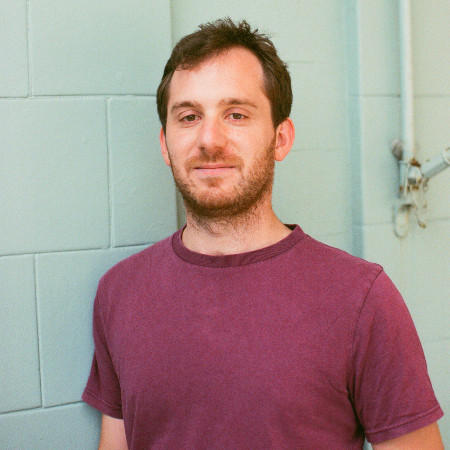
My birthday was last month, but I pretty much stopped marking it a few years ago.
Another year of chronic illness doesn’t feel like much to celebrate, and a party is physically out of the question. So this year, I want to make it count for something instead.
I have ME/CFS (myalgic encephalomyelitis/chronic fatigue syndrome).
My symptoms started ten years ago, age 27. I was a working musician — teaching children in schools, composing, running bands, releasing music, writing arrangements, playing sessions — and physically active: cycling everywhere, swimming, running, surfing, taking kids on camping holidays.
Over several years, the illness gradually took all of that away. At 33, I had to stop working entirely and apply for disability benefits. I'm now 37.
Most of my friendships have effectively ended — not through any falling out, but simply because I'm not physically able to talk on the phone enough, let alone meet up in person, to maintain them.
I was part of an incredible community of musicians in London, and my participation in that community has been ended by this illness.
I'm not writing this to make anyone feel sorry for me, I'm writing it because this is happening to at least 400,000 people across the UK — and probably more than a million people if we include those who developed ME after Covid. Each one has a version of this story.
I know the world is in an absolute state right now - the climate, war, the economy, the NHS, and so much more — every one of those problems is harder to solve when hundreds of thousands of people who could be contributing and finding solutions are too ill to leave the house.
Globally, an estimated 24 million people have ME.
That's a lot of missing doctors, engineers, scientists, teachers, musicians, writers, researchers, parents, and many other things!
I really believe we need to see funding ME research not as in competition with other causes, but as an investment in getting people back into the world.
And yet ME research is notoriously unfunded.
Between 2019 and 2024, the UK government spent roughly £6.6 million on ME research — about £1.3 million a year. We don’t have any published figures from the government on how much they spend on disability benefits for people like me, so here's a rough estimate:
around 400,000 people with ME, averaging £10,000/year in disability benefits through PIP and Universal Credit (deliberately averaged down — the DWP's own data shows only a fraction of people with ME successfully claim, and many receive nothing at all).
That puts the annual bill at around £4 billion.
That's a ratio of roughly 3,000 to 1: for every £3,000 spent managing the consequences of ME, about £1 goes towards understanding or treating it.
The government itself has acknowledged that ME is an underfunded research area. And with ME rates rising since Covid, that benefits bill is only going up.
Decades of the illness being wrongly characterised as psychological — something now emphatically rejected by the 2021 NICE guidelines for ME/CFS — catastrophically held back biomedical research and left patients fighting for basic recognition. But the science is finally moving, and there are finally good reasons for hope.
SequenceME will sequence the entire genome of 18,000 people with ME and Long Covid — potentially the world's largest 'long-read' whole-genome study of any disease.
Building on the landmark DecodeME study (which identified eight genetic signals confirming ME involves the immune and nervous systems), it could identify the biological mechanisms driving ME and point directly towards treatments.
Phase 1 is funded and a pilot has successfully proven the method works. The next phase — sequencing 10,000 participants — needs £7 million, and the full study will cost £20 million. Donations to this Just Giving crowdfunder will go towards SequenceME, through Action for ME, a UK charity (Gift Aid eligible).
In Norway, ResetME is a placebo-controlled trial of a drug called daratumumab that showed remarkable results in a pilot study — 6 out of 10 patients markedly improved. It's being funded almost entirely by patients and their families, because public funders won't step up and the drug manufacturer won't offer a discount.
You can contribute to ResetME here - https://www.me-foreningen.no/om-oss/stott-me-foreningen/me-fondet/english-me-fund/
The single most effective thing you can do right now is to help fund high-quality biomedical research, and encourage others to do the same
_______________________________________________________________________
SOURCES:
UK prevalence — "at least 400,000 people" Ponting & Samms, University of Edinburgh (2025). "Unequal access to diagnosis of myalgic encephalomyelitis in England," BMC Public Health. https://www.ed.ac.uk/news/mecfs-cases-in-england-higher-than-first-projected
"probably over a million including those who developed ME after Covid" ME Association estimate (July 2025), combining the 404,000 figure with ONS Long Covid data and US studies suggesting 40–60% of Long Covid patients meet ME/CFS criteria. Total estimate: 1.35 million. https://meassociation.org.uk/2025/07/prevalence-latest-research-suggests-a-62-increase-on-historic-estimates-for-me-cfs-in-the-uk/
"an estimated 24 million people globally" Cited by Oxford Nanopore / Action for ME in the SequenceME launch announcement. This is itself a rough extrapolation from prevalence estimates applied to global population — widely used but acknowledged as approximate. https://nanoporetech.com/news/oxford-nanopore-action-for-me-and-university-of-edinburgh-launch-groundbreaking-study-into-the-genetics-of-me
"£6.6 million on ME research, about £1.3 million a year" (2019–2024) Parliamentary answer, 10 July 2025. NIHR: ~£3.7 million; MRC: ~£2.9 million over 5 years. https://meassociation.org.uk/2025/07/parliamentary-question-on-me-cfs-delivery-plan-and-research-funding/
"the government itself has acknowledged that ME is an underfunded research area" Same parliamentary answer: "We have assessed the ME/CFS research portfolio... and acknowledge that this is an under-funded area." https://meassociation.org.uk/2025/07/parliamentary-question-on-me-cfs-delivery-plan-and-research-funding/
"only a fraction of people with ME successfully claim" (DWP/PIP) Benefits and Work (2024): 28,121 PIP claimants with CFS as main condition. The Canary (2025): 56,102 with ME as primary condition, representing roughly 4–5% of estimated ME population. https://www.benefitsandwork.co.uk/personal-independence-payment-pip/pip-health-conditions/claim-pip-for-me-and-cfs https://www.thecanary.co/long-read/2025/04/01/dwp-cuts-me-cfs/
"3,000 to 1 ratio" / "£4 billion annual benefits bill" ⚠️ No published source — this is our own calculation. £1.3m/year research ÷ into £4bn/year estimated benefits = ~3,000:1. The £4bn is derived from 400,000 × £10,000 average, which is explicitly flagged in the text as a rough estimate averaged down.
"wrongly characterised as psychological — something now rejected by the 2021 NICE guidelines" NICE Guideline NG206 (2021). Specifically recommends against graded exercise therapy and does not recommend CBT as a treatment for ME/CFS. https://www.nice.org.uk/guidance/ng206
"disease burden greater than HIV/AIDS" Mirin, Dimmock & Jason (2020). "Research update: The relation between ME/CFS disease burden and research funding in the USA." Work, 66(2):277-282. https://pubmed.ncbi.nlm.nih.gov/32568148/
"3–7% of what comparable diseases are allocated" Wikipedia (Controversies related to ME/CFS), citing multiple sources including Mirin et al. https://en.wikipedia.org/wiki/Controversies_related_to_ME/CFS — For a more direct source, the ME/CFS Science analysis is stronger: https://mecfsscience.org/disease-funding-comparison-me-cfs/
DecodeME — "eight genetic signals confirming ME involves the immune and nervous systems" Boutin et al. (2025). "Initial findings from the DecodeME genome-wide association study." MedRxiv preprint. https://www.meresearch.org.uk/decodeme-initial-results-published/
SequenceME — phase 1 funded, pilot complete, next phase £7 million, total £20 million Action for ME announcement (Feb 2026) confirming phase 1 funding secured; Action for ME project page confirming £7m next phase and £20m total. https://www.actionforme.org.uk/sequence-me-long-covid-launches/ https://www.actionforme.org.uk/sequenceme-first-of-a-kind-genetic-study/
ResetME — "6 out of 10 patients markedly improved" Fluge et al. (2025). "Plasma cell targeting with the anti-CD38 antibody daratumumab in ME/CFS — a clinical pilot study." Frontiers in Medicine. https://pubmed.ncbi.nlm.nih.gov/40703261/
ResetME — "funded almost entirely by patients and their families" Norwegian ME Association English donation page; also S4ME forum thread quoting Fluge and Mella directly. https://www.me-foreningen.no/om-oss/stott-me-foreningen/me-fondet/english-me-fund/