
Story
WITH OR WITHOUT A DONATION, PLEASE SHARE THIS PAGE-EVERY SHARE HELPS.
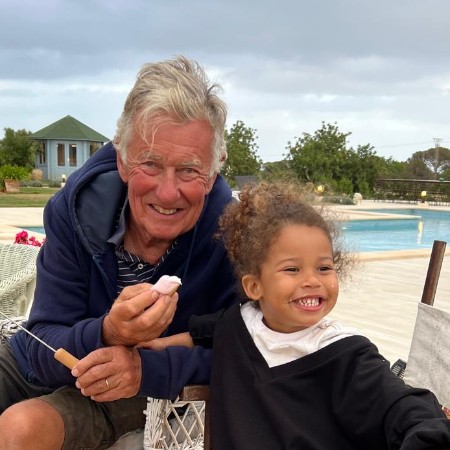
I’m John Bristow, a retired British Airways captain living with motor neurone disease. My goal is to help raise £2.7 million to support human trials of M102, a promising potential treatment being developed by researchers at the University of Sheffield.
My Story
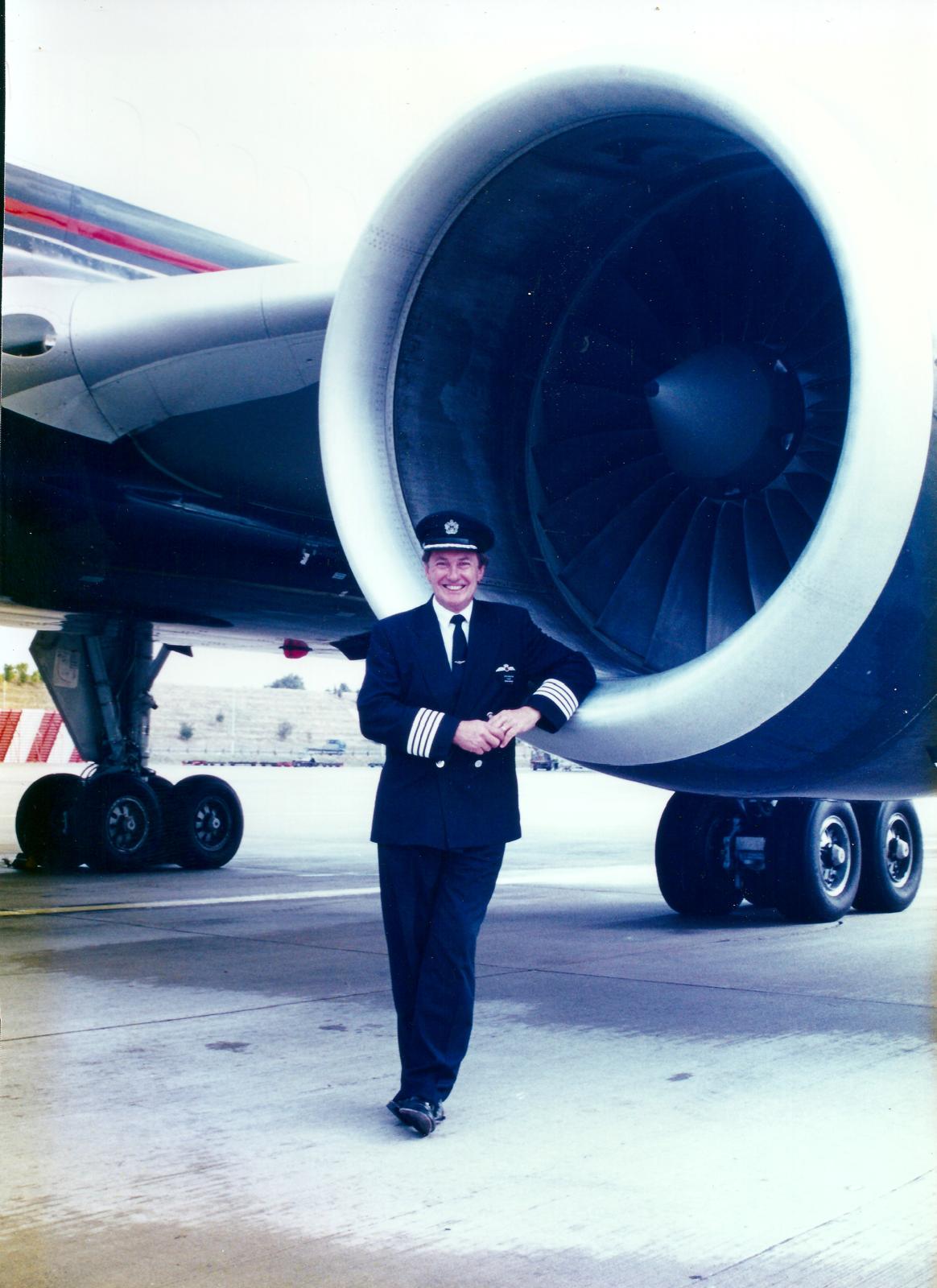
I’ve been very fortunate. After an amazing career as a British Airways captain, I retired in 2003 and eventually made Mallorca my home with my family.
We built a finca, planted a small vineyard and enjoyed sharing our wine with friends. Many would say we were living the dream. They would have been right.
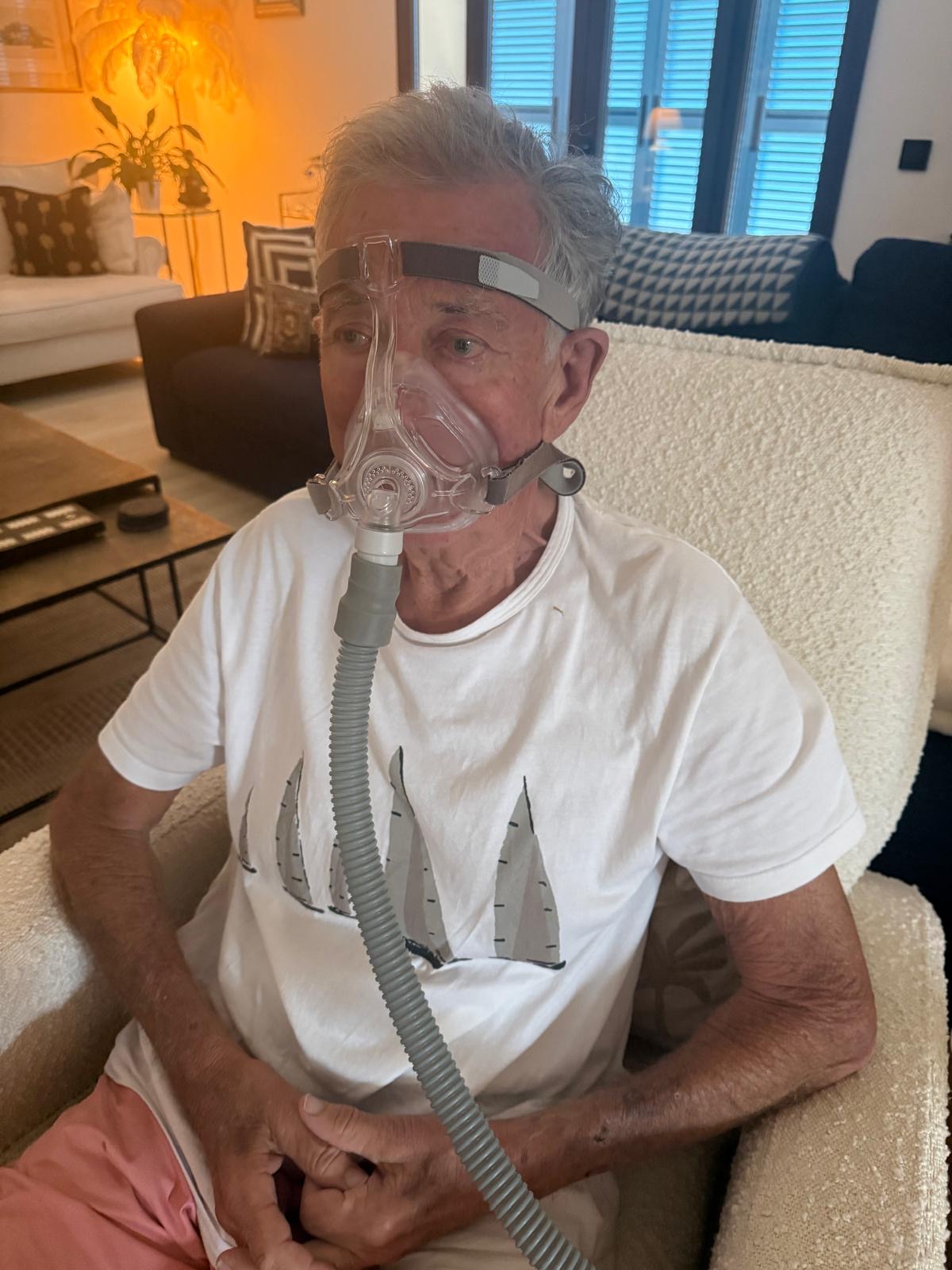
Then, last year, I was diagnosed with motor neurone disease. It has robbed me of my voice. I still have my mobility, just, but breathing has become difficult, and I need a machine to help me breathe much of the time.
At my age, I look back with gratitude. I’ve had a wonderful life and an extraordinary career. What I find particularly heartbreaking is seeing younger people with young families facing this disease, with so much life still ahead of them.
Sir Kevin Sinfield’s remarkable fundraising challenges have shown what people can achieve together. Before I “get off the train”, I want to do what I can, too.
I may not be here to see the results of this research. But I would love to help give other families a future with more time, more independence and more hope.
Why M102 gives me hope
At the Sheffield Institute for Translational Neuroscience—SITraN—researchers led by Professor Dame Pamela Shaw are developing an experimental drug called M102.
MND damages the motor neurons: the nerve cells that send messages from our brain and spinal cord to our muscles. As those cells stop working, people can progressively lose the ability to move, speak, swallow and breathe.
Several damaging processes contribute to this loss of nerve cells. That is one reason finding effective treatments is so difficult.
M102 takes a promising approach: activating two of the cells’ own protective systems, with the aim of tackling several damaging processes together.
The science, in everyday language
The two protective systems are called NRF2 and HSF1. Think of them as switches that activate a cell’s internal defence and maintenance teams.
These teams help cells cope with harmful stress and manage proteins that have become damaged or stopped working properly. Together, the pathways also influence inflammation and the systems cells use to produce energy.
The hope is that strengthening these natural defences could help vulnerable motor neurons survive and function for longer—and potentially slow the progression of MND.
Why this deserves support
M102 has already shown encouraging results in research conducted before human trials:
* Protection of motor neurons in laboratory experiments involving cells derived from people with ALS, a form of MND.
* Improvements in movement and nerve-function measures in mouse models of the disease.
* Protective effects across laboratory models representing several forms of ALS, providing a reason to investigate whether its benefits could extend beyond one particular genetic subtype.
M102 can also cross the blood–brain barrier—the protective boundary that a drug must pass to reach the brain—and has been developed for oral administration.
Researchers have developed biological measurements, known as biomarkers, to help assess whether the drug is activating its intended protective systems. These could make human studies more informative by showing whether M102 is doing what it is designed to do.
These findings give researchers a strong reason to move forward. They do not yet prove that M102 works in people. That is why clinical trials are essential.
Why £2.7 million matters
The funding requirement shared with us is £2.7 million to support the next stage of M102’s development: human clinical trials. Our ambition is to help raise that amount.
Moving a potential medicine from the laboratory into human studies requires substantial funding. Early trials must establish safety and appropriate dosing, and assess how the drug behaves in the body. Further studies are needed to find out whether it can help people living with MND.
The team’s information states that M102 has been manufactured for clinical evaluation, preclinical safety testing has been completed, and approval is in place to begin an initial safety and dose-finding study in healthy volunteers in Australia. Studies involving people with MND in the UK are planned thereafter.
This appeal will help support that crucial move from encouraging scientific findings to testing a potential treatment in people.
Where your donation will go
Donations through this page will go directly to the University of Sheffield and be specifically allocated to the M102 research programme at SITraN.
You will be supporting the research and its progress towards clinical trials, with the aim of developing a treatment that could benefit people living with MND.
M102 remains experimental. There is no guarantee that it will become an effective treatment, and it cannot currently be described as a cure. But the evidence so far offers a compelling reason to give this research the chance to answer those vital questions.
Help me get this appeal airborne
£2.7 million is a big destination. As a captain, I know that reaching a destination takes a good team.
Whether you can make a donation, organise a fundraising event, introduce this appeal to a business or simply share it with friends, you can help us build that team.
For someone living with MND, slowing the disease could mean more time to speak with their children, more time to remain independent, and more time with the people they love.
That is what makes this research matter so much to me.
Please help me get this project off the ground. With your support and a good tailwind, let’s see how far we can go.
With my heartfelt thanks,
Captain John Bristow
NOTE FROM THE UNIVERSITY OF SHEFFIELD:
The University of Sheffield is an exempt charity and is registered with the Fundraising Regulator.
If you are a UK taxpayer, please remember to tick the Gift Aid box when making your donation so we can reclaim the tax on your gift at no extra cost to you.
If you would like to discuss making a gift in another way, please contact Elenna Williams at e.j.williams@sheffield.ac.uk, who will be glad to assist you.