


Story
I'm wearing a hat, to mark 5 years since I had brain surgery:
A few weeks into the first covid lockdown, when we were all still struggling to buy toilet roll, a consultant neurosurgeon phoned to tell me I had a brain tumour.
My tumour, a meningioma, was about 4-5cm, and had grown slowly over a decade. It is deep in a bit of the brain called the cavernous sinus, wrapped around my occipital nerve and trigeminal nerve.
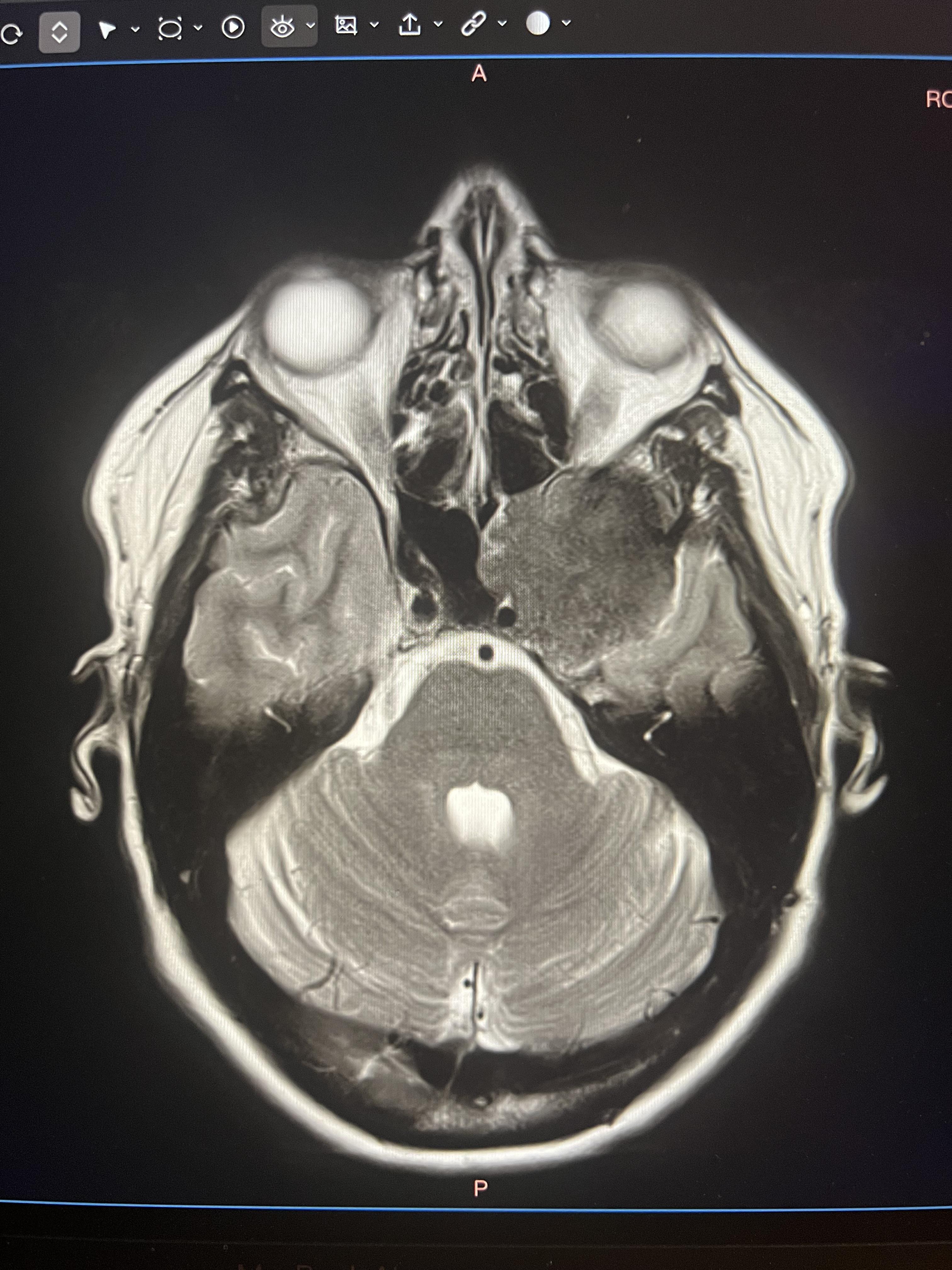
After diagnosis, I spent the next 6 months discovering that many seemingly unrelated problems I'd had over the years were actually caused by the tumour. Headaches that had been diagnosed as migraines, facial pain, dizziness that I'd just learned to live with, visual problems that had been dismissed by opticians, and the tinnitus that eventually led to diagnosis.
I was offered surgery, and said yes, because I knew that if I left it to grow I would become increasingly disabled.
On 31st March 2021 I went into Southmead hospital for an 11 hour craniotomy to de-bulk the tumour. We were still in lockdown, so I was unable to have hospital visitors. Saying goodbye to my kids, not knowing when I would see them again, or if I would come home with a permanent disability, was the hardest thing I'd ever done. The 10% chance of permanent disability or stroke, and the additional 10% chance of temporary disability, was utterly terrifying. I can't describe the relief of waking up when they transferred me to a bed in ITU, and realising I was still me. I was lucky to recover quickly, with no complications, and they sent me home after a week. Once home, it took a few months, and various stages of mullet, to feel human again.
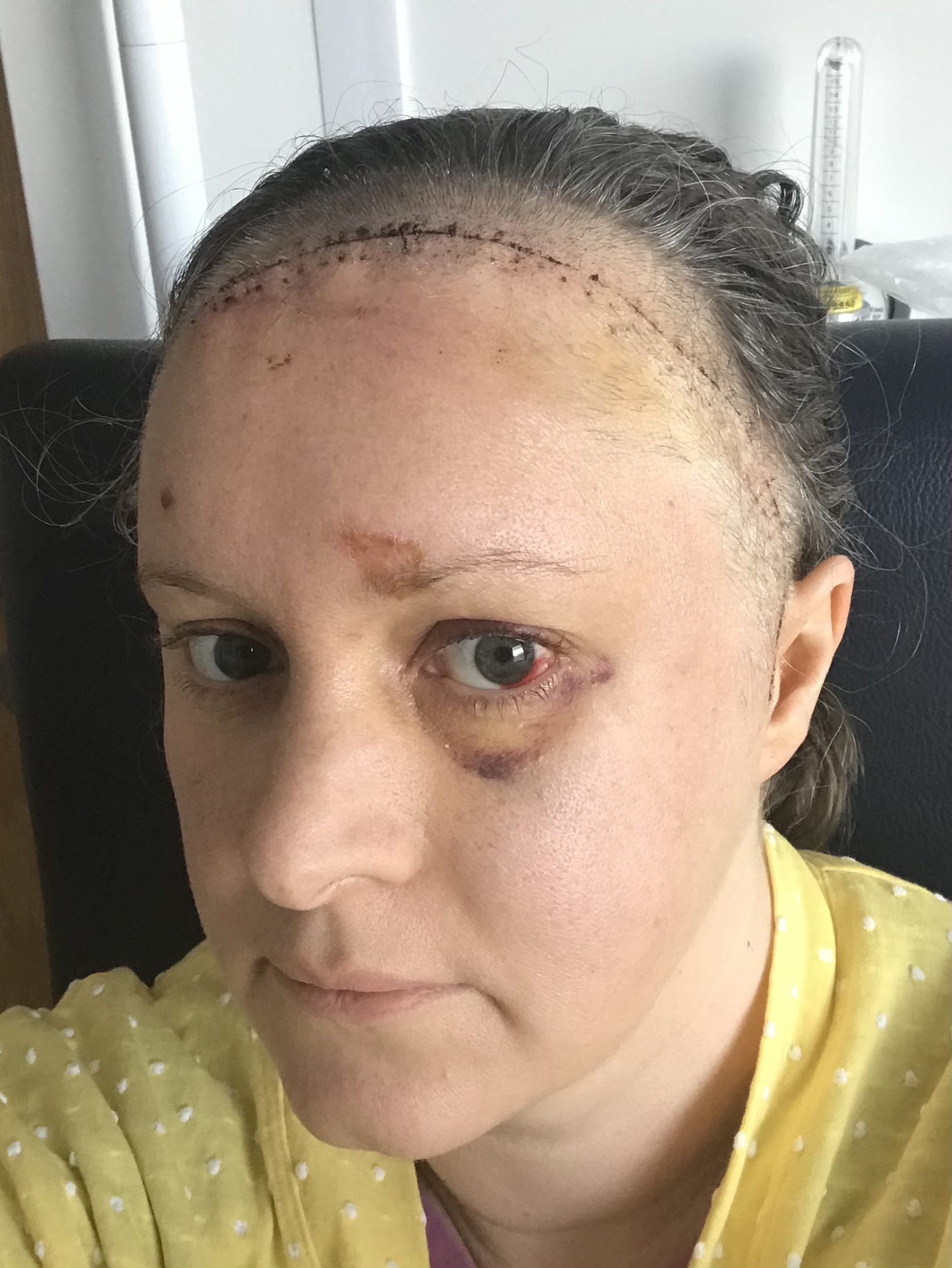
The surgery removed part of it, but I've still got a sizeable, currently stable, brain tumour, and there is further treatment in my future. It can never be fully removed because of where it sits, wrapped around the nerves and growing into complex structures in my skull base. But for now the effects are minimal, and I consider myself very lucky indeed. So many of my meningio-mates (friends from support groups with meningiomas) have been forced to give up work and independence, and live with chronic pain and lifelong disability.
One great result of the surgery was that samples of my tumour were donated to the Brain Tissue Biobank in Plymouth, for researchers at Brain Tumour Research and the University of Plymouth, who are studying the triggers and treatments of low grade tumours.
The research is desperately needed. Unlike many other cancers, brain tumour treatment has hardly changed in the past 20 years, because it has not been a focus for research.
Here are the facts from Brain Tumour Research:
Brain tumours are indiscriminate; they can affect anyone at any age.
Brain tumours kill more children and adults under the age of 40 than any other cancer.
Just 1% of the national spend on cancer research has been allocated to brain tumours since records began in 2002.
One in three people knows someone affected by a brain tumour.
Each year, nearly 13,000 people are diagnosed with a brain tumour.
Every day, 35 people are diagnosed with a brain tumour.
Brain tumours kill more children than leukaemia.
Brain tumours kill more women under the age of 35 than breast cancer.
Brain tumours kill more men under the age of 70 than prostate cancer.
In England, you are four times less likely to survive five years following a brain tumour diagnosis compared to the average for all cancers.
There are more than 100 different types of brain tumour making them notoriously difficult to diagnose and treat.
In England, nearly 40% of brain tumour patients are diagnosed in emergency care when their symptoms have developed more significantly.
More than 100,000 people are estimated to be living with a brain tumour or the long-term impact of their diagnosis.