

Story
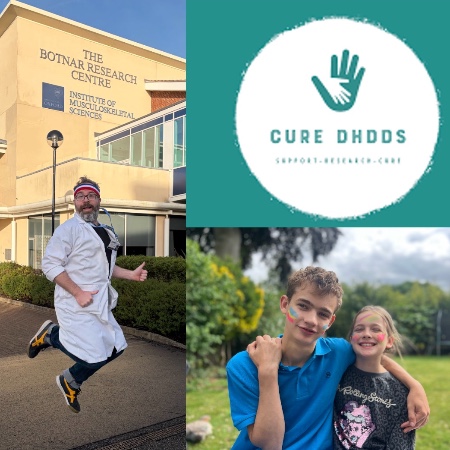
As a medical researcher, I’ve seen first-hand how hard it’s become to secure research funding. There’s less money to go around, more competition than ever, and just to make things extra complicated, the funding that does exist often gets spread very unevenly between diseases.
Now imagine what that feels like for people (and their families) living with a condition so rare it doesn’t even have a proper name. No public profile, no big-name ambassadors, no flashy fundraising campaigns. Diseases like this struggle to attract sponsors, media attention, or research teams. And the people living with them are left feeling as if no one is out there trying to find new treatments or understand their condition well enough to make life better.
People affected by DHDDS mutations face symptoms such as parkinsonism, seizures, and learning difficulties that worsen over time. Cure DHDDS is a small charity founded by parents whose children have these ultra-rare mutations. Their mission is simple but vital: raise awareness, support families, and push forward the research that otherwise wouldn’t happen.
This is a difficult and challenging effort, but just because it is challenging does not mean we shouldn’t do it. Same can be said for a ridiculously out-of-shape, but optimistic, non-runner scientist trying to run the London Marathon!
So here I am: running for Cure DHDDS, doing my best impression of a slow-moving experiment in motion. If you’re able, please consider donating to my marathon effort and helping a tiny charity make a huge impact for families who desperately need support.
And if you’d like some light-hearted entertainment (mostly involving me trying not to fall over), you can follow my training journey on Instagram: @ploddingprofessor.
Thank you for reading and for cheering on both the science and the slow runner behind it.
To find out more about the brilliant work this little charity does, head over to www.curedhdds.org or watch https://www.youtube.com/watch?v=dOBxRDA1Opo