Story
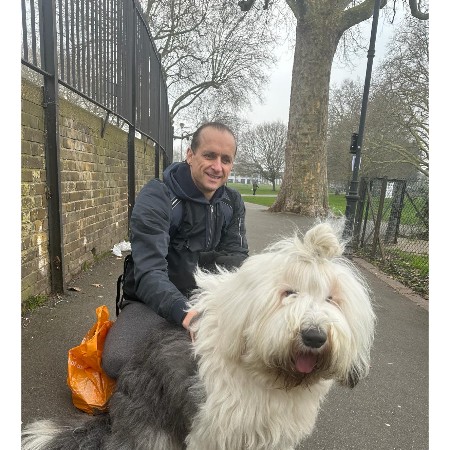
I am grateful to share that I will be jogging, walking and struggling along a 100km distance ultra course from London to Brighton to raise funds for the, unique and most worthwhile, London Autism Charity Group.
A little about my story so far : My name is Sean Kennedy, 53, and I was lately diagnosed with autism in April 2022, at 49 years, and later on with ADHD, inattentive type, in January 2024. Before my diagnosis I struggled with anxiety, depression, OCD and addiction. I have been in 4 rehabilitation centres for addiction with alcohol, drugs and online behaviours.
Throughout my teens and 20's I managed to hide behind outward performances through representing my country, Scotland, at table tennis and later on I spent 3 years in the Royal Air Force where I was often on leave from duty to play table tennis for the RAF. I forced a move out of the RAF, due to social anxiety and depression and spent 3 years at two Edinburgh Colleges doing a HND in Sports Coaching with Sports Development. I received 7 merits and excelled in coaching 2 children's football teams and an adult football team who played in the Edinburgh Maybury League. Behind the outward performances I could rarely relax around fellow students. Small talk was something I was poor at and I could not engage with banter. I would often direct conversations to my two specialised subjects of football and religion and I often would be anxious in crowded classroom environments due to sensory overwhelm. My way of dealing with this was to hyperfocus and provoke my imagination but this meant that my head would shake when I heard any perceived distracting sounds around me. I was the weird outsider in the class. But I was determined to do well, due to being a dreamer at Primary and Secondary Schools and I felt I had something to prove to myself and my biological family where the term 'your as thick as two short planks' was something I was told regularly. Thankfully on the adult course's many of the tutors were sympathetic and could see I was putting in my 100%. I am thankful to the patient fellow-students who were patient and respectful of me.
I left the college with burnout whilst my fellow students went on to complete a final degree year to become gym teachers and one or two went to professional football clubs to become coaches. In contrast, I gave up on sport and went to live in a prestigious International Bible College. I was around a significant amount of care and love but I was the one from the dysfunctional family and I again was the outsider who needed excessive amounts of time, alone, to prepare for any challenge presented to me. I would often wake up at 3am to compensate for my social shyness and spend hours obsessively preparing for the forthcoming public engagement's where I would often speak in front of large audiences. I was a desperate perfectionist.
I was grateful when during the second year of my time at the Bible College I was asked to leave after I confessed to the College Superiors that I had engaged in a consensual indiscretion with a person from outside the college. I, again, was unwell with undiagnosed autistic burnout. I was asked to go to volunteer at a rural rehabilitation Centre near Armagh in Northern Ireland where I did refurbishment tasks around the disused hospital which was being converted into a safe space for people in recovery. I stayed there for 7 months.
I returned to Edinburgh with my dreams of being a sports coach and then a Biblical teacher in tatters. I ended up doing a nightshift driving job at a private business park where I had very little contact with anyone. This suited me fine as I was tired of feeling anxious and hyper sensitive in enclosed people environments. I became depressed and tried suicide on 3 occasions. These were cries for help but it would take a another 12 years before I accepted that my normal wasn't normal and it came in the autumn of 2017 whilst I was staying in a log cabin, at a crisis centre in Shepton Mallet, and reading a book called 'Autism for Dummies.'
I related to most of what was shared and realised that autism wasn't an intellectual disability though it can include this, but rather, for me, is a neurological response of overwhelm to sensory stimuli in ones environment. I realised that this was the root of my issues- my incapacity to relax in people orientated spaces as I was so easily distracted by noises. My mind was often foggy and my only role in life was to be there for my friends- codependently. I would quickly become overwhelmed unless I had a real focus. I also struggled with small talk and having balanced conversations with people. I was often preoccupied and it took so much effort to be present with anyone. I had a need for routines and I was and I'm a highly sensitive person in a world that wasn't able to see, or offer any solutions to my predicament. I felt alone and had done for decades.
But I did find some relief in 2022 when I received my diagnosis for autism. It helped me to realise, and have some self-compassion as to why I had acted out with alcohol, drugs and superficial online relationships. I have attended 12 step meetings since 2008, and these meetings have provided me with a space to share my truth and listen to other people's perspective's. I am still a working progress but part of my journey now is about using my experience to listen and be a supportive presence to other people who have not had the support they need, particularly neurodivergent people and those who struggle with inter-personal relationships. I am grateful to have 2 years and 6 months freedom from substances and now do part-time work as a Raynor massage therapist. I have jogged 3 ultra runs since 2021. Ironically, I ran for the National Autistic Society when I ran the London marathon in 1997 even though I was none the wiser about my own condition. ;) Running and walking a 100km within 24 hours will be a challenge for me but I love the freedom of being in nature and movement is very helpful for my impairments. Moving in nature is like breathing and I love tree's and enjoy hugging them.
Their are many neurodivergent people who slip through the cracks and this is where the London Autism Charity Group come's in by providing safe spaces for a variety of neurodivergent people who need a safe space to be themselves.
I am asking you if you could, please, support myself and the London autistic charity group by making a donation.
Thank you kindly and thank you for those who have patiently read the above.
The London autism charity group is a charity that promotes the social inclusion, mental health and wellbeing of all autistic people, including children and their families.
The charity also promotes social awareness and acceptance of autism and helps to reduce stigma and discrimination.
The London autism charity group facilitates regular autistic meet-ups with a range of creative opportunities including music therapy, thai chi, art, walks and the opportunity to be in a safe space and enjoy a cup of tea. These groups meet up in various venues in and around London and have become a lifeline to many, including myself, in combating loneliness, isolation, depression and anxiety that can often afflict the autistic person.
