 Campaign by
Story
RSPB Titchwell Marsh Appeal – Restore Volunteer Marsh
(Please see below for Jul 2026 update and project next steps)
Volunteer Marsh at RSPB Titchwell is a vital saltmarsh habitat that protects wildlife and people from the sea. But erosion is accelerating, threatening sea defences and freshwater habitats. With your support, we’ll build a new regulated tidal exchange and spillway system, create habitat for iconic birds like Avocets, Redshank and Spoonbills, and transform North Parrinder Hide into a hub for citizen science and storytelling.
Together, we can restore this special place and make it a national model for climate resilience.
Volunteer Marsh is an intertidal area that’s meant to gently fill with seawater during high tides. This helps protect the nearby freshwater habitats by softening wave impact and keeping sea water from getting in.
The problem
Instead of building up, the saltmarsh at Volunteer Marsh is eroding. The breach, once a gateway for restoration, has become a high-energy tidal channel. Sediment is being lost, creek banks are collapsing, and erosion is now threatening the very sea defences that protect Titchwell’s freshwater habitats.
From this in 2013 -
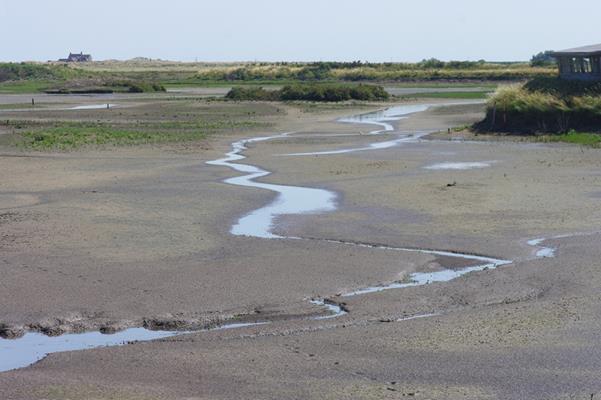
To this in 2025-
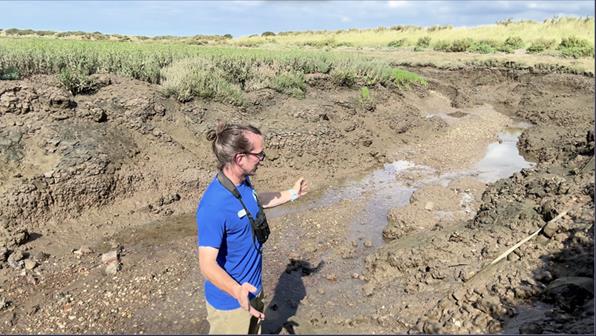
If we don’t act, we risk losing the safe haven that supports rare and iconic species like the Avocet, Bittern, Marsh Harrier, and Common Tern.
A Nature-Based Solution to a Changing Coastline
Thanks to new research funded by WWF and cutting-edge modelling by coastal engineers, we now understand what’s happening, and how to fix it.
We’re proposing a new phase of work to:
1. Build a Spillway System
We’ll model, design, and construct a regulated tidal exchange and spillway system to manage water flow and reduce erosion. This will encourage sediment build-up to help the saltmarsh recover and thrive.
2. Create New Wildlife Habitat
We’ll design and shape new breeding, feeding, and roosting areas for birds like Avocets, Terns, Ringed Plovers, and Spoonbills.
3. Connect People to Nature
We’ll establish North Parrinder Hide as a hub for wildlife watching, citizen science, and storytelling, tracking the marsh’s transformation into a thriving saline lagoon.
Be Part of the Solution
We need your help to make this next phase a reality.
Carrying out essential engineering work in this sensitive habitat is both complex and costly. To help us protect and enhance this special place for wildlife and visitors alike, we’re inviting our community to contribute directly to the restoration efforts.
We hope that you will consider supporting our project and give as much as you feel able.
If you would like to discuss making a donation of £500 or more, please contact the RSPB Philanthropy team on philanthropy@rspb.org.uk
Should we be unable to secure the funding required to realise this project, your donations will be used to benefit other vital work on site at RSPB Titchwell Marsh. Similarly, if we achieve target, then any donations over and above will also go to helping to fund Titchwell Marsh.
Thank you for your vital support.
Update 28/01/26: Work Has Started at Titchwell - But We Still Need Your Support
Thank you to everyone who has supported the Volunteer Marsh Restoration Appeal so far. The work has now begun with our partners, Salix River & Wetland Services Ltd, and your support is already making a difference.
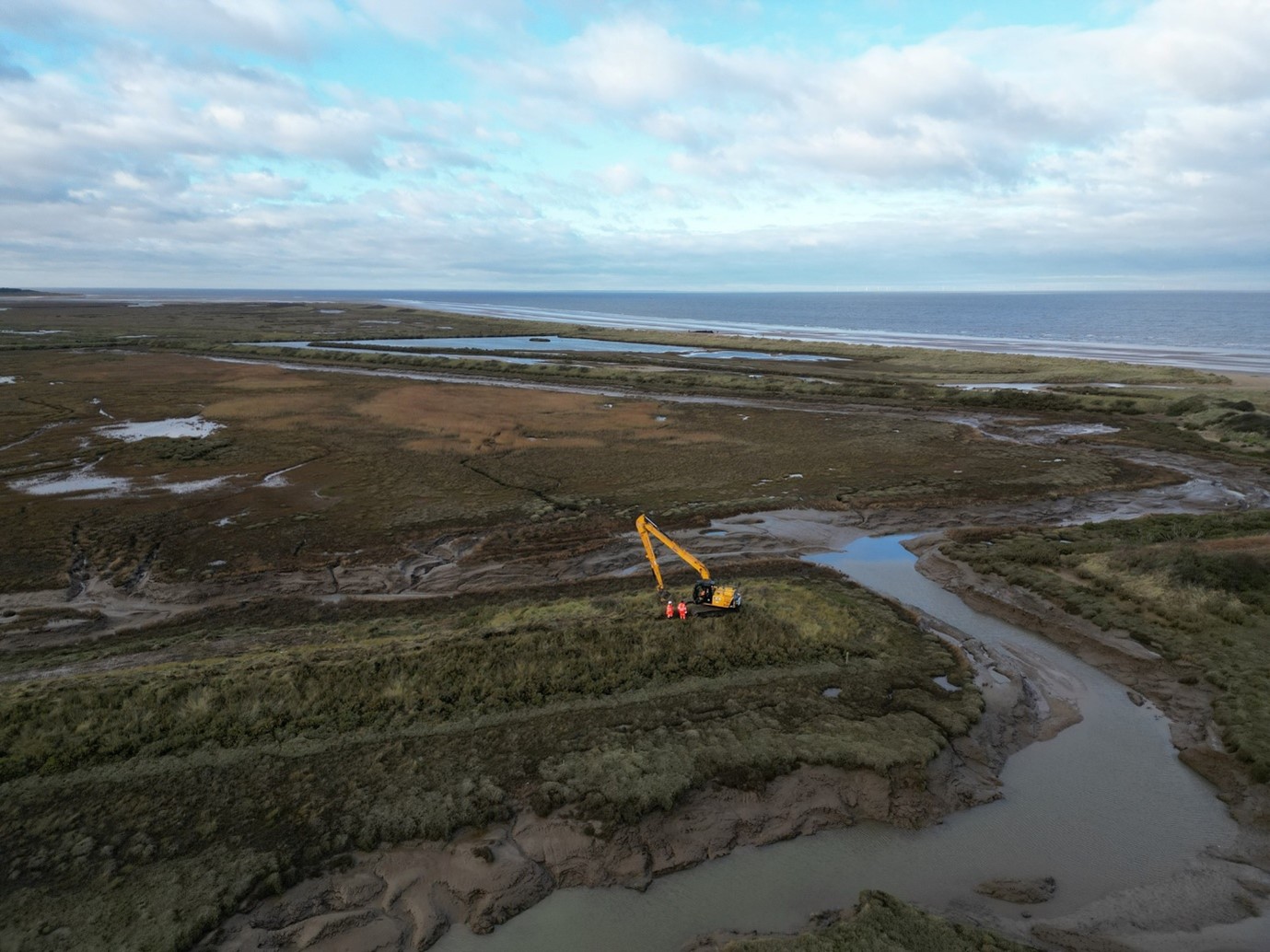
Excavator at the eastern sea bank breach location looking West (Salix River & Wetland).
What’s Happening on Site Right Now
Thanks to your generous support, specialist coastal engineers Salix are working on Volunteer Marsh. The work includes:
• Partially infilling the breach in the eastern bank
• Installing pipes and tidal flaps to carefully control water flow
• Lowering part of the bank to create a regulated tidal spillway, allowing seawater to enter safely during big tides
• Creating a new saline lagoon with islands, pools, and channels creating future habitat for Avocet, Oystercatcher, Ringed Plover, Common Tern and more!
All of this is essential to safeguard Titchwell’s freshwater habitats and the wildlife that depends on them.
But We Still Urgently Need Your Help
To avoid diverting money away from other critical conservation work at Titchwell, we’re asking supporters to continue sharing and donating if they can.
A message from Hayley Roan, Senior Sites Manager
“People travel from across the country to experience the incredible birdlife at Titchwell Marsh. Engineering work has already begun on site, but we still urgently need additional donations so we don’t have to divert vital funds away from other conservation priorities. Without this essential structural work, we risk losing not only precious wildlife habitat but also an iconic part of Norfolk that helps people connect with nature.”
This is a pivotal moment for Titchwell.
We’ve started - but we can’t finish without you. Every donation, large or small, helps us push this crucial work over the line.
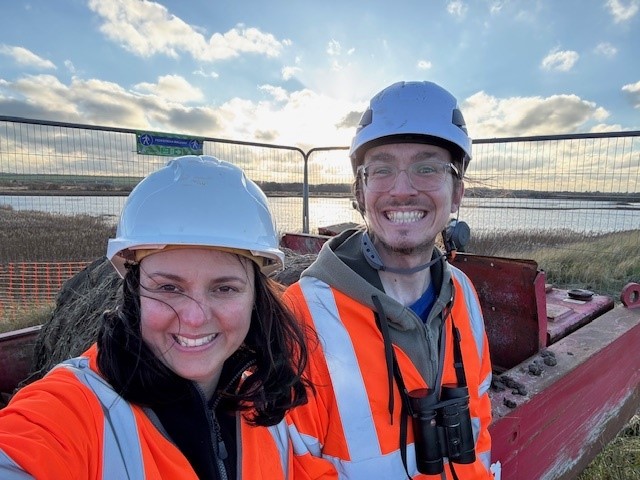
RSPB Senior Sites Manager and Warden, Hayley and Ryan, checking in on progress out on the marsh. (RSPB)
Update 27/02/2026 - Thank You
Thanks to your incredible generosity, we’ve now raised over £16,000 to go towards the cost of the work on Volunteer Marsh and we are so grateful.
Over the past few weeks, we’ve been working out on the marsh, battling weather that just didn’t want to cooperate. Heavy rain and saturated ground meant that, despite everyone’s best efforts, we reached a point where carrying on this winter simply wasn’t feasible.
On 20 February, we wrapped up the first phase of work. We cannot continue into the spring because while birds currently do not nest on Volunteer Marsh, the access route to Volunteer Marsh runs behind Freshmarsh, and any activity on this access route during the bird breeding season would risk disturbing nesting birds there.
So, this pause, while frustrating as we were hoping to finish all of the work this winter, is a responsible decision for wildlife and to ensure that the works we have already done can remain safe until we come back to complete.
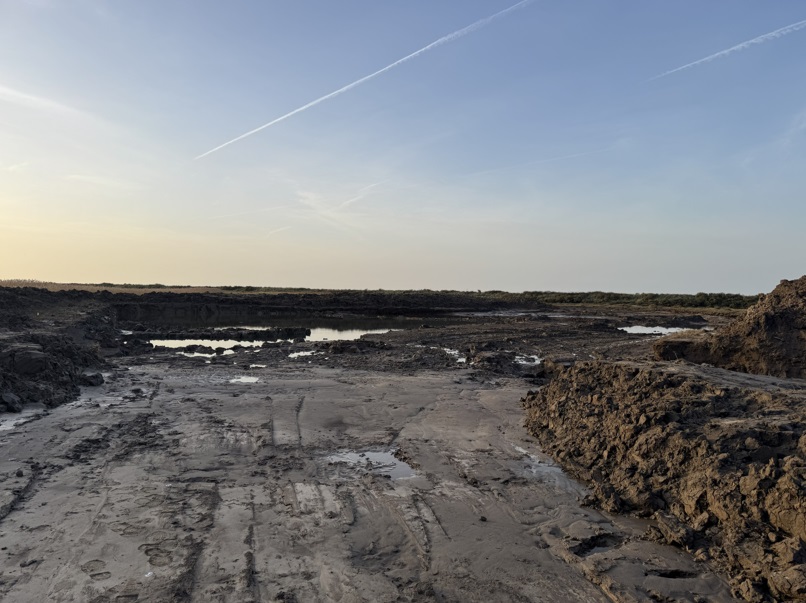
We plan to return in late summer/early autumn, once the breeding season has finished and when the tides, weather and ground conditions give us the best possible chance of completing the work.
What your support has helped achieve already:
A huge amount of groundwork has been completed and it puts us in a far stronger place for the next phase:
• Much of the clay material needed for partially infilling the breach to create a regulated tidal exchange has been stockpiled, no small achievement in the conditions we were working in.
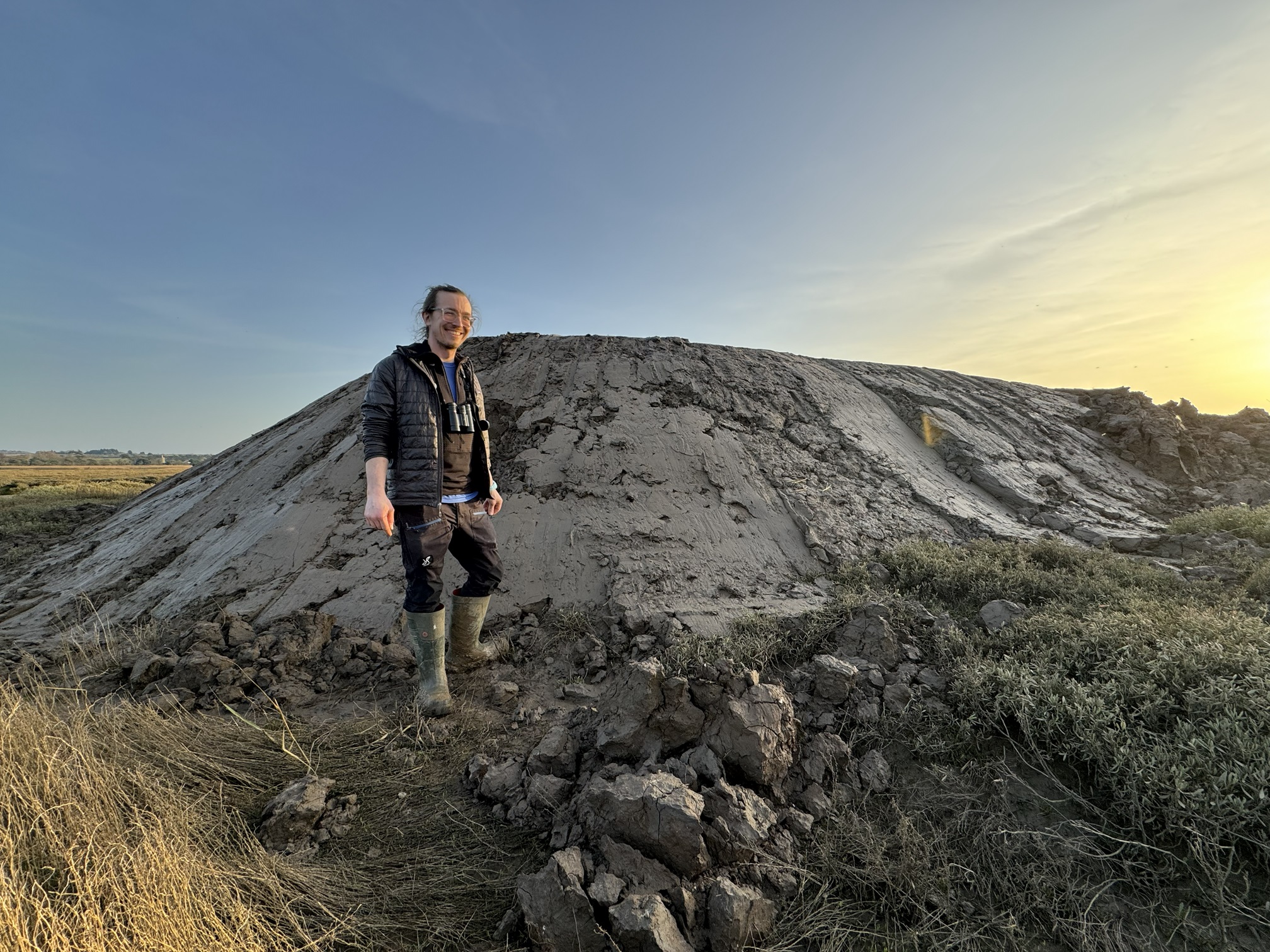
• The spillway has been formed and is protected under the stockpiled clay, awaiting the final works and erosion protection once the regulated tidal exchange has been constructed in the autumn.
• The crossing point onto the marsh which allowed us to access and excavate the clay has been protected. This is something that took significant work and will now save both time and cost later.
• A temporary channel has been dug to help protect that crossing and reduce erosion on vulnerable sections of Parrinder Bank.
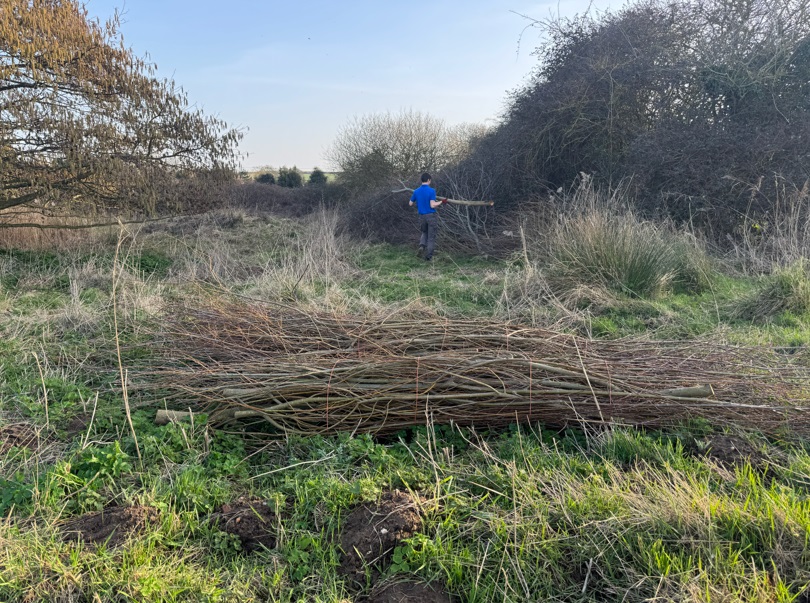
• Our brilliant residential volunteers have been making willow bundles to provide extra short term erosion protection to the Parrinder Bank.
One of the most heartening things we’ve witnessed over the last few weeks and the weather ground us down, is the marsh responding almost instantly to changes. The crossing point temporarily held more water on one side of the marsh, which attracted much more bird activity with Wigeon gathering to feed on floating seeds. Even these early, short term changes are giving the marsh a lift, offering a glimpse of the thriving system we’re working towards.
What happens next:
Thanks to the inspiring support of everyone who donated, and some cost savings within the winter works, we’re in a good position to pick up the project again later this year.
However, there is still more to do and your continued support is still needed to ensure that we complete this project when contractors return in the autumn. Your support has got us so far, and yet there is still a steep hill to climb. Every donation we receive from you means that we don’t divert crucial funds from RSPB’s core funds and means that we can do bigger, better and bolder things for nature.
Thank you from us all at RSPB Titchwell.
Update 04/07/2026 – The final phase is in sight!
Since our last update at the end of February, we've been working closely with our contractors to plan the next phase of the project, and we're delighted to share that they will be returning on 17 August for around six weeks to complete the work that we simply couldn't finish earlier this year due to relentless rain, flooding and extremely challenging ground conditions.
Looking back – why the work was delayed
At the start of the year, one of the biggest challenges was sourcing the high-quality clay needed to infill part of the breach using material from within Volunteer Marsh itself.
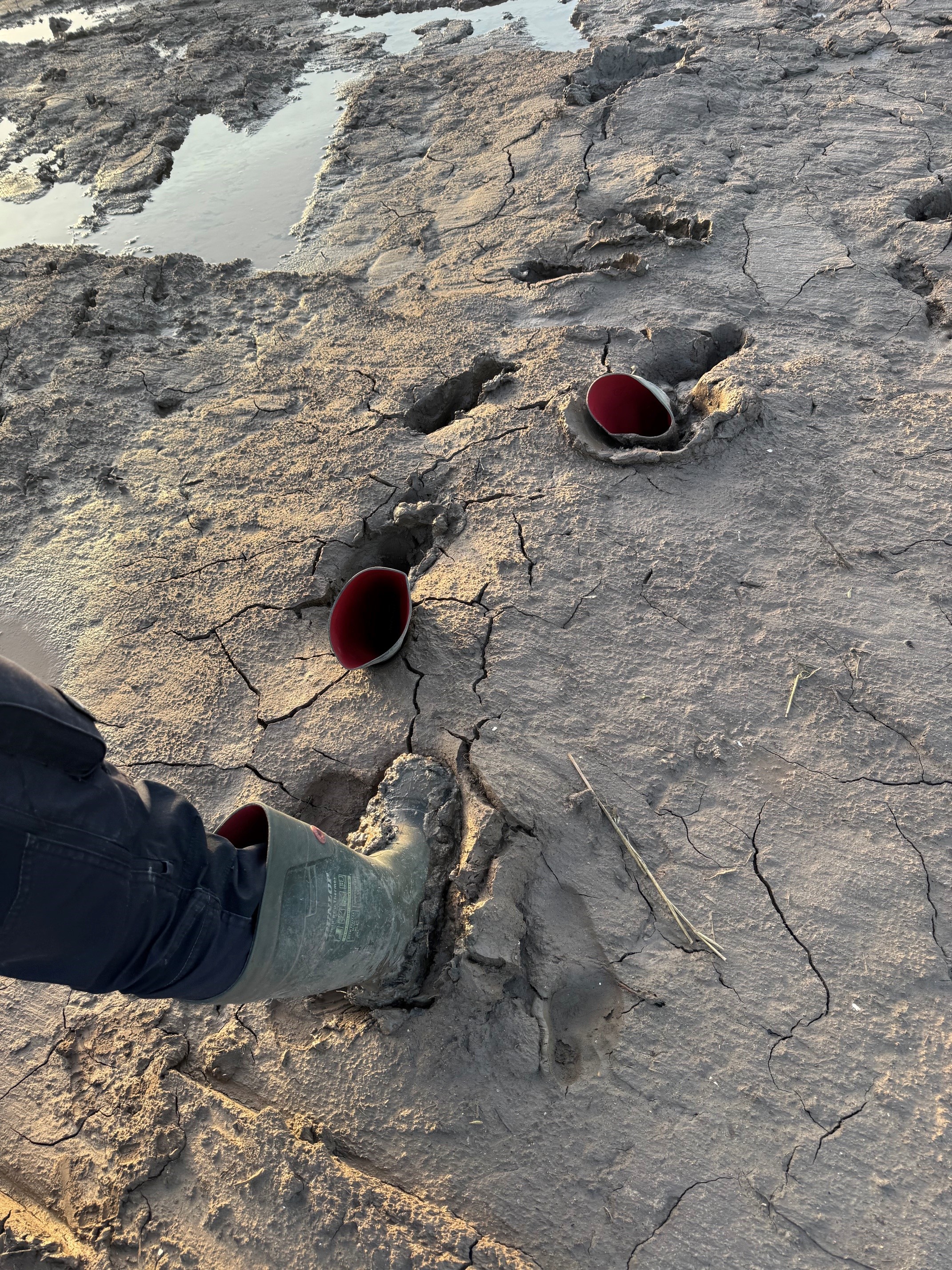
As many of you will remember, the project faced a series of setbacks. The temporary dam we constructed was washed away during flooding, our first excavation area didn't contain the quality of clay we had expected, the crossing point had to be relocated, and the access road became unsafe after weeks of exceptionally wet weather.
Despite these challenges, we eventually succeeded in excavating a borrow pit and stockpiling a huge quantity of suitable clay. Unfortunately, by the time this was completed, we had run out of time before the bird breeding season began, meaning works had to pause.
What's happening next?
Since then, a huge amount of planning has taken place behind the scenes.
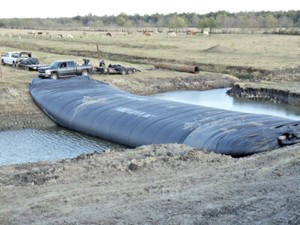
Our contractors, Salix River & Wetland Services, have developed some ingenious solutions to enable the final phase of construction. These include the use of AquaDams which are temporary water-filled dams designed to keep the tides at bay while work is underway. Because the site is exposed to such large tidal movements, there simply isn't an AquaDam large enough (or affordable enough!) to exclude every tide. Instead, the team has carefully designed a construction approach that will allow the breach infill and pipe installation to be completed safely, using an AquaDam and working around the tides.
The spillway – a key part of the design.
During the first phase of the project, a new spillway was created. This is a deliberately lowered and specially protected section of the sea wall that allows the biggest tides each year to over top it and flow into the marsh.
We expect this to happen only a handful of times annually, but it plays a vital role in the long-term resilience of the site.
The spillway will help equalise water pressure on either side of the sea wall during extreme high tides, storm surges and other major tidal events. By providing a controlled route for water to enter the marsh, it will reduce the force that would otherwise be exerted on the partially infilled breach and other sections of the sea wall, potentially causing uncontrolled breaches.
It will also bring important ecological benefits. These larger tidal events will deliver fresh sediment, fish and invertebrates into the marsh, helping to maintain the dynamic coastal habitat that will make Volunteer Marsh such a special place for wildlife.
We need to finish the final touches to the spillway by lowering it to the exact height it needs to be an installing the special erosion protection.
We're nearly there – but we still need your help
We're incredibly excited to welcome Salix River & Wetland Services back to site and finally bring this ambitious project to completion.
Of course, the unavoidable delays and contract extension have increased costs. Thanks to the incredibly generous support of the Geoffrey Watling Charity, alongside donations from several RSPB Local Groups and many individual supporters, we are already well on the way to funding this final phase.
However, we still have £30,000 left to raise to fully fund the completion of the project.
Every donation, no matter the size, helps us get one step closer to securing the future of Volunteer Marsh.
Thank you for your continued support – we couldn't do this without you.